
It is a peculiar human quality: we desire something definite in life, we are bored with predictability and start to feel an urge to have a certain amount of the unpredictable. Predictability soon gets boring, be it the paycheck on a regular day, life in general, or even a winning streak. The brain does not program its repetition with the same thing on a daily basis just because the same thing pays the bills.
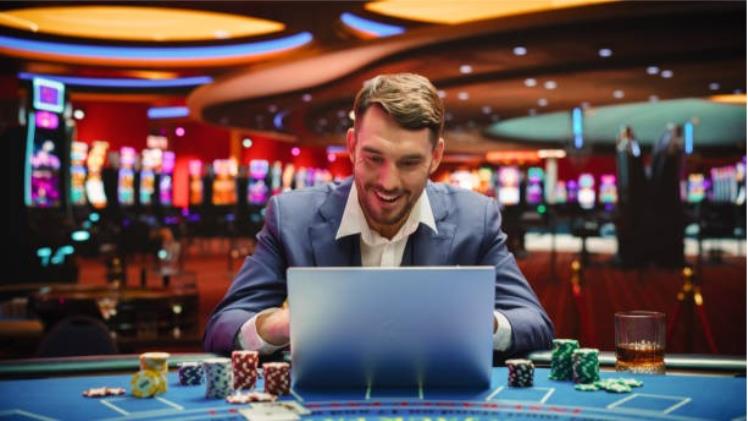
This is the paradox that must have been in effect in case you have ever seen players in National Casino New Zealand. It is not just profit, and individuals can be winning. It is regarding the potentiality–that innocent nonrecognition of the next thing. The same psychological pressure affects behaviors well beyond the casino floor and affects our online/offline financial behaviors, our attitude towards money, relationships and risk-taking.
The Odyssey of Unavoidable Victory.
It is admitted that predictability is tedious. Would you not fain even fain get out of bed? The fact of life, itself, and playing it, is exciting with anticipation. It is what creates cliffhangers, what makes people scroll through apps, and even what causes the most reasonable people to be hooked on some degree of uncertainty.
Foreseeability eliminates shock and emotion. When you know you will win all the rounds, then the prize becomes worthless. The brain ceases to become excited and begins to yawn. This is referred to as diminishing marginal utility in behavioural economics; the more you experience the same kind of thing, the less satisfaction you get.
The reason why the Brain Loves Uncertainty.
However, there is a twist: when the outcome becomes predictable, dopamine levels decrease. The error in the prediction of rewards – that point in time when the reality and the expectation are different – is eliminated. That is, once you are aware of what is to follow, then your brain does not care anymore.
That is the force of variable rewards —rewards that occur at random times. They generate a curve of curiosity, hope and suspense. It is the same psychological cycle that makes you refresh your inbox, scroll TikTok, or wait to have a jackpot win.
The dopamine loop does not require big wins; it requires uncertainty. It survives on the fact that this time may be different.
The Digital World of predictability.
And contemporary technology is more aware of it. Social sites, games, and online entertainment all use the concept of variable rewards to keep us entertained. Your likes and notifications are well-balanced shots of uncertainty.
That is why even risk-averse, logical individuals may be tempted to check one more time. It is not weak; it is the brain’s reward system going to what it was designed to do. The human mind is designed to be exploratory, seeking novelty and deriving meaning from randomness.
This principle reaches an interesting ethical equilibrium in gaming settings like safe, controlled sites like National Casino New Zealand. It should be the excitement of involvement, not exploitation. A secure online casino is not successful through manipulation of unpredictability; rather, it is organized in a responsible way: fair games, random results, and transparent protective measures. It is magic to maintain the excitement and keep the player safe.
Just imagine it was the difference between riding the waves and drowning – the same waves, different control.
The Price of Excessive Certainty.
Predictability will kill motivation, even in gaming. The same is observed with financial markets. Investors tend to exit or move to riskier markets when they anticipate consistent returns. This is what psychologists refer to as decision fatigue—the cognitive fatigue that occurs when a person has nothing new to assess.
Success is a regular thing, which makes one comfortable, but being comfortable makes one complacent. This may eventually result in behavioural inertia, which is a fancy way of saying bored out of your mind. You cease learning, adjusting, and living.
This manifests as scroll fatigue in digital life—incessantly swiping through the same predetermined content, because you know you will not get much, but hope you will get a seed of something new. The algorithm provides sufficient variation to keep the experience familiar to a subtle slot reel of attention. We want to be stimulated and to be safe — a paradox that characterizes nearly all human decisions.
Analyst Opinions: In the Middle Ground between Security and Surprise.
Behavioural scientists argue that how we relate to predictability is how we relate to control. Too little, and we panic. Too much, and we disengage. We are challenged and safe at the sweet spot, or what researchers call optimal uncertainty.
This is why sites such as National Casino New Zealand emphasise safe unpredictability. It is not anarchy, but controlled enthusiasm. Unpredictable results, open regulations, and accountable mechanisms can enable players to enjoy the rush of uncertainty without jeopardising justice and security.
This balance is what we will all need, even whilst not playing games. Be it investments, habits you are trying to create, or being motivated and keeping it going thus far in an unfulfilling job, the trick is to bring harmless newness: new challenges, new environments and new rewards which are always there within safe boundaries. It is only in uncertainty that predictability may be a profitable proposition and not in certainty.